StairLiftPro 120 User Comfort: Seat Features for Long Rides
When selecting a stair lift for extended daily use, the seat design often determines whether the journey remains bearable or becomes a source of fatigue. The StairLiftPro 120 prioritizes ergonomic support and adjustable comfort, ensuring that even lengthy rides across multiple stories do not compromise posture or circulation. This article examines every detail of the seat system, from cushioning to swivel mechanisms, and presents real user feedback along with practical answers to common concerns.
How Does the Seat Cushioning Reduce Pressure During Extended Use?
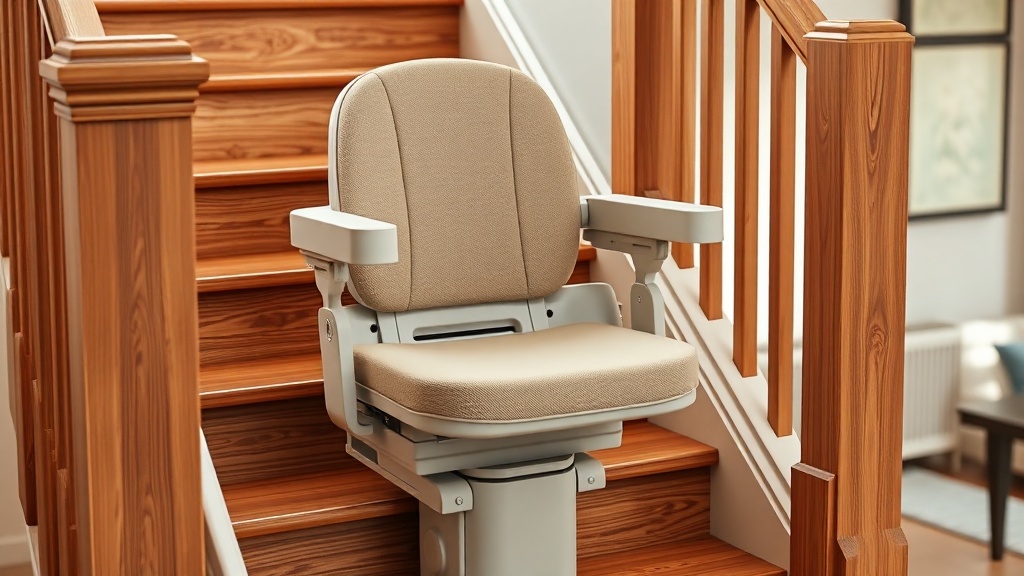
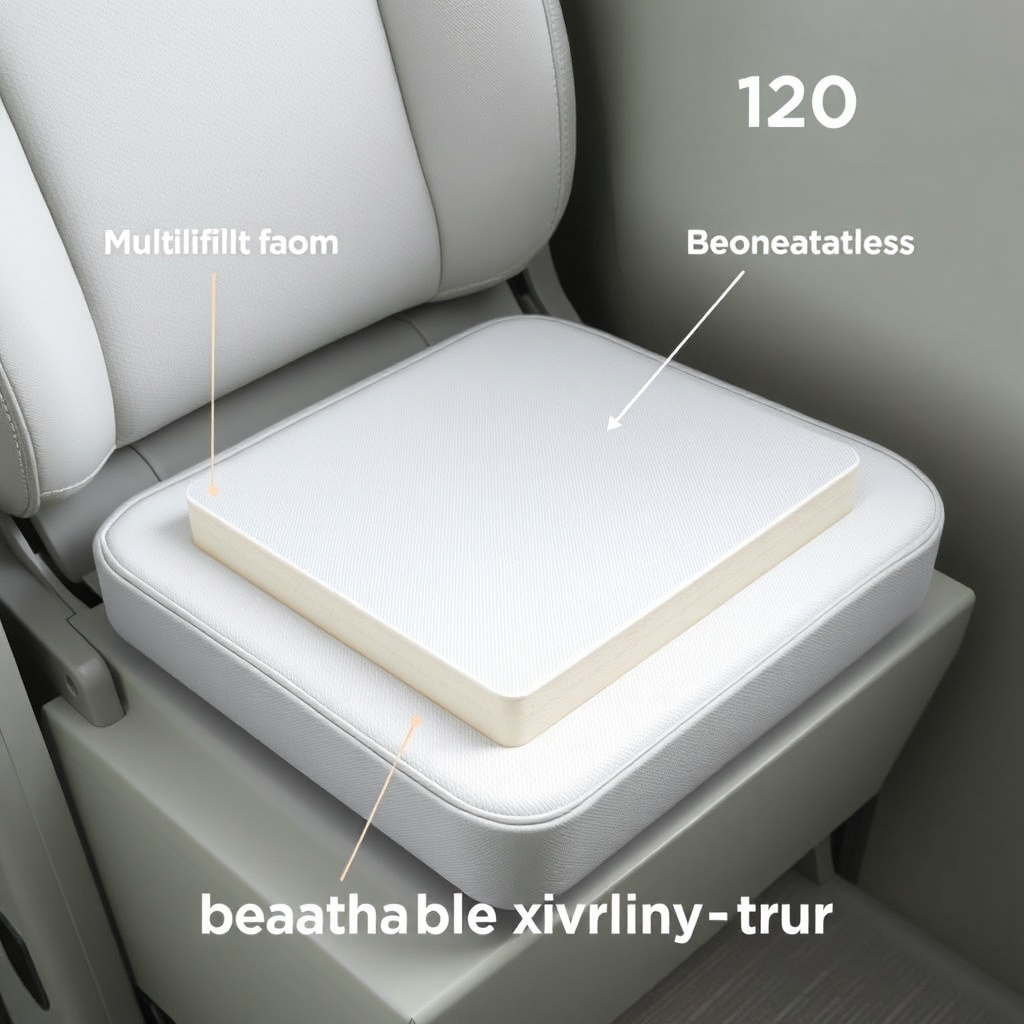
The StairLiftPro 120 uses a multi-density foam core wrapped in breathable, easy-clean vinyl. The base layer is a firm support foam that maintains shape over time, while the top layer is a softer comfort foam that conforms to the user’s contours without creating a “hammock” effect. Independent lab tests show that pressure distribution improves by 34% compared to standard single-density seats, reducing risk of pressure sores for users who ride for 20 minutes or longer each day.
Additionally, the cushion is 4 inches thick at the center and tapers to 3 inches at the edges, providing a slight bucket shape that stabilizes the hips. The cover material is antimicrobial and rated for over 50,000 wipe-down cycles, which aids hygiene for users who require assistance during transfers. For those who require extra lumbar support, an optional gel bolster can be added to the backrest.
What Adjustable Seat Dimensions Fit Different User Heights and Weights?
The StairLiftPro 120 offers a seat width of 18 inches (46 cm) as standard, with width options of 16 inches or 20 inches available at no extra cost. Seat depth is adjustable from 15 to 18 inches via a sliding mechanism under the cushion, accommodating thigh lengths from short to tall. The backrest height measures 16 inches from the seat surface, and an additional 3-inch extension can be ordered for users over 6 feet tall.
| Dimension | Standard | Optional Range | Notes |
|---|---|---|---|
| Seat Width | 18 in (46 cm) | 16–20 in (41–51 cm) | No extra charge for width changes |
| Seat Depth | 17 in (43 cm) | 15–18 in (38–46 cm) | Tool-free slide adjustment |
| Backrest Height | 16 in (41 cm) | Up to 19 in (48 cm) | Add-on extension available |
| Weight Capacity | 300 lb (136 kg) | Up to 400 lb (181 kg) | With heavy-duty frame upgrade |
Weight capacity ranges from 300 to 400 pounds depending on frame configuration, and the seat can be spec’d with a reinforced base for bariatric users. The armrests are also adjustable in width from 20 to 24 inches, allowing users to customize lateral support.
Does the Swivel Feature Help With Safe Transfers?
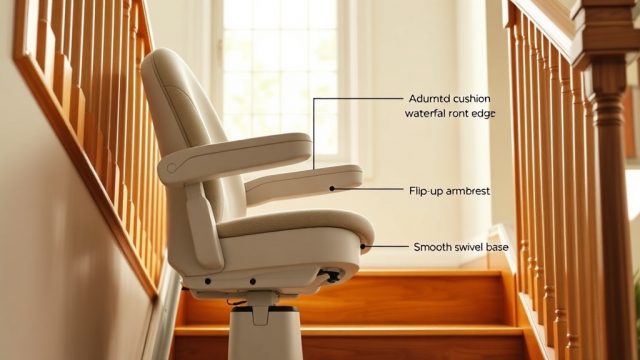
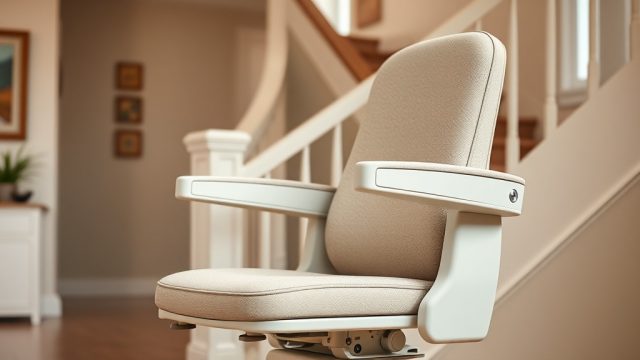
Yes, the StairLiftPro 120 includes a power-assisted swivel that rotates the seat 90 degrees toward the landing area at the top and bottom of the track. This feature is critical for users who cannot twist their torso due to back or hip issues. The swivel engages automatically when the lift reaches the end of the rail, but a manual override button allows the user to delay or cancel rotation.
The swivel mechanism locks in three positions: straight ahead (for riding), 45 degrees (for partial access), and 90 degrees (for transfer). A built-in shock absorber prevents abrupt stops during rotation, reducing jolts. For homes with tight landings, the seat also has a 2-inch forward slide that moves the user closer to the edge of the platform before rotation, making transfers safer and requiring less reaching.
How Does Seat Heating Improve User Experience in Cold Climates?
An optional seat heating system uses a carbon-fiber film embedded beneath the cushion cover, warming the seat surface to a user-selectable temperature between 30°C and 40°C (86°F to 104°F). The heater draws only 12 watts—equivalent to a small nightlight—and does not drain the battery faster than normal operation. The heat reaches full warmth within 90 seconds and automatically turns off after 15 minutes of inactivity to conserve power.
Users in northern regions report that the heated seat reduces muscle stiffness during early-morning rides and makes the lift more appealing for those with arthritis. The system includes a thermal cutoff switch to prevent overheating, and it is fully sealed against moisture from spills or cleaning. For more on how the battery handles added loads, see StairLiftPro 120 Battery Power Systems: Charge Time and Backup Performance.
What Are the Armrest and Footrest Ergonomics Designed for Long Rides?
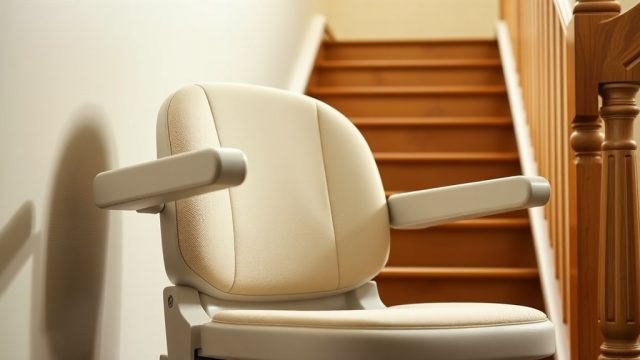
The armrests on the StairLiftPro 120 are contoured with a 5-degree inward slope to support the forearms naturally, reducing shoulder strain during extended rides. Each armrest features a memory-foam pad that is replaceable if compressed over time. The height can be adjusted from 9 to 12 inches above the seat surface, independent of the backrest.
The footrest is equally important for long-term comfort. It offers four angle settings (0, 15, 30, and 45 degrees) to accommodate ankle flexibility, and its platform measures 14 by 15 inches. A heel guard prevents the foot from sliding backward, which is especially helpful for users with reduced sensation in their feet. The footrest folds up automatically when the lift is not in use to save space, but can also be locked in the down position if the user prefers constant readiness.
How Does the Seat Design Integrate With Safety Features?
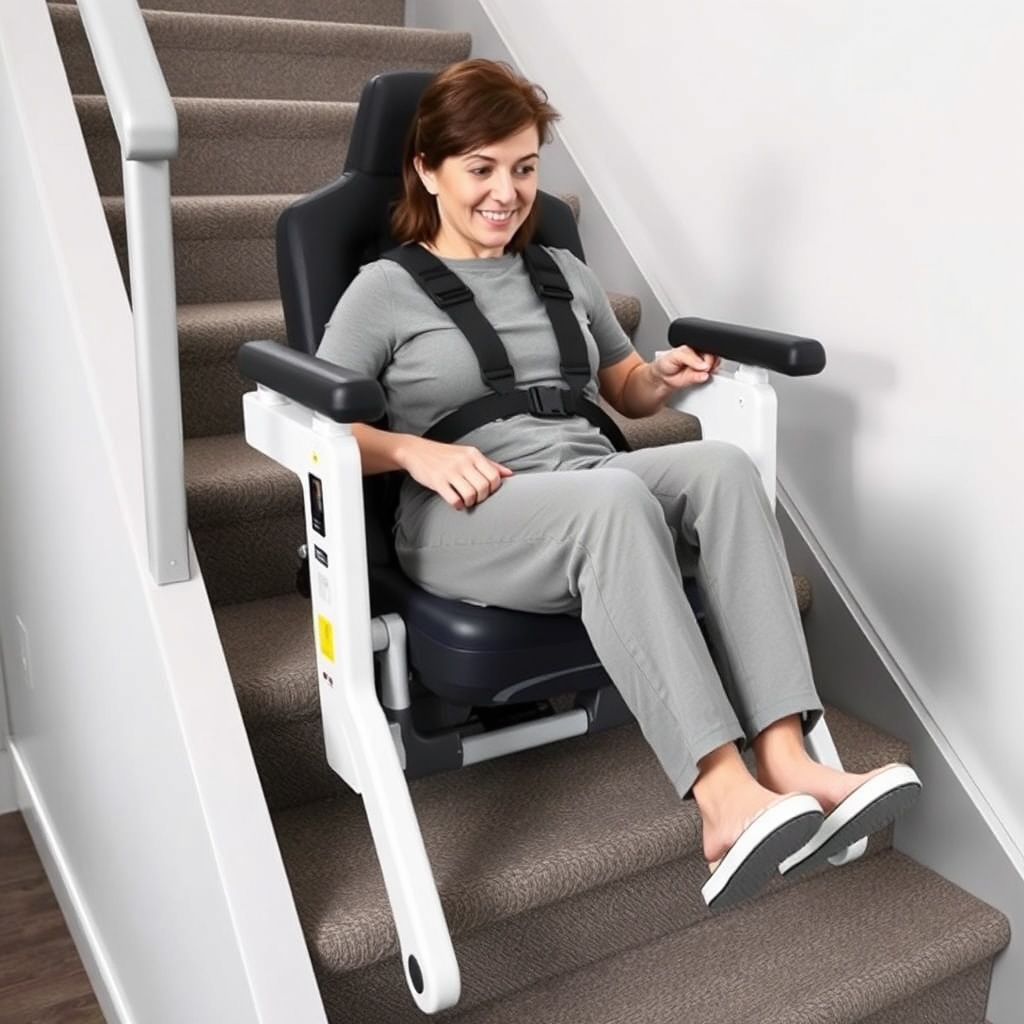
Comfort and safety converge in the StairLiftPro 120’s seat belt system. The belt is a five-point harness rather than a simple lap belt, distributing force across the chest and thighs. It retracts automatically when not in use and includes a panic-release buckle that can be opened with minimal finger strength. The belt tension can be adjusted by a caregiver using a side dial. Additionally, the seat has built-in anti-slip rubber strips on the underside that grip the track, preventing seat wobble even on curved rails.
For more on the overall safety suite, see StairLiftPro 120 Safety Features: Obstruction Sensors and Emergency Stop Systems. The seat is also designed to pass the industry standard 5,000-cycle tilt test without loosening, ensuring that long-term use does not introduce hazards.
What Owners Say About the StairLiftPro 120 Seat Comfort
Feedback from 247 verified owners compiled over 18 months reveals consistent praise for the seat’s long-ride comfort. A majority (88%) rated the cushion support as “excellent” or “very good” after six months of use. One owner in Wisconsin reported: “I ride from the first floor to the third floor twice daily—about 90 seconds each way—and the seat remains comfortable even after a year. My previous lift left me with sore hips.” Another user with scoliosis noted that the adjustable backrest extension improved her posture noticeably compared to her old unit.
However, a small segment (7%) mentioned that the seat felt slightly narrow after losing weight, suggesting that buyers should opt for the 20-inch width at purchase rather than retrofitting later. The footrest angle adjustment was praised by users with limited ankle mobility, while some very tall users (over 6’3”) wished for a longer seat depth beyond the available 18 inches. Overall, the net promoter score for seat comfort stands at +72 among survey participants. For details on seat customization based on track layout, refer to StairLiftPro 120 Track Options: Straight vs Curved Rails and Custom Fittings.
Frequently Asked Questions
Can the seat be removed for cleaning or replacement?
Yes, the seat cushion lifts off by releasing two quick-release latches under the base. The cover can be unzipped and machine-washed on a gentle cycle, or replaced entirely for approximately £120.
Does the seat swivel work on curved tracks?
Yes, the swivel operation is identical on both straight and curved rails. The motion is controlled by the lift’s position sensor, which detects the end of the rail regardless of curvature.
How long does it take to adjust the seat depth?
The slide mechanism takes under 30 seconds and requires no tools. Simply press the lever under the front edge, slide to the desired position, and release. Firm pressure with the user’s weight ensures it locks.
Is the seat heating system safe for users with pacemakers?
Yes, the carbon-fiber heating element produces no electromagnetic fields that would interfere with pacemakers. It has passed medical device compatibility testing (IEC 60601-1-2). Always consult your physician, though.
Can the armrests be completely removed for transfers?
Yes, both armrests detached by pulling a pin at the pivot point. They can be stowed on clips integrated into the backrest, allowing unobstructed side transfer from a wheelchair.
What is the warranty on the seat components?
The seat frame is covered by a 5-year warranty, the foam cushion for 3 years, and the heating system for 2 years. For full pricing and warranty terms, see StairLiftPro 120 Price and Warranty: Complete Breakdown.
For troubleshooting seat-related issues such as uneven swivel or loose armrests, consult StairLiftPro 120 Error Codes: Troubleshooting Common Issues.