Stannah 600 Seat Comfort: Swivel, Padding and Armrests
When investing in a stair lift, the seat is where you’ll spend every ride. The Stannah 600 model is engineered for users who may sit for several minutes per trip, multiple times daily. This article examines the seat’s swivel mechanism, cushion density, and armrest ergonomics to help you decide if it suits your comfort needs.
How Does the Swivel Mechanism Work on the Stannah 600?
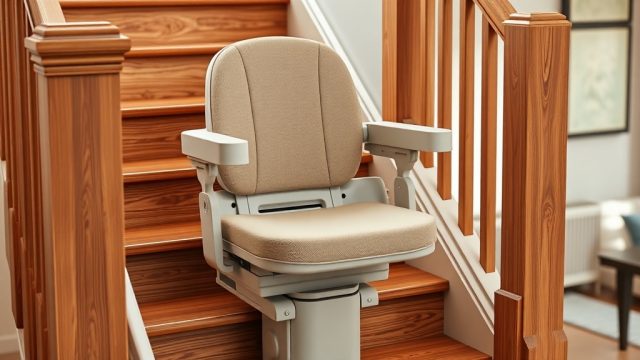
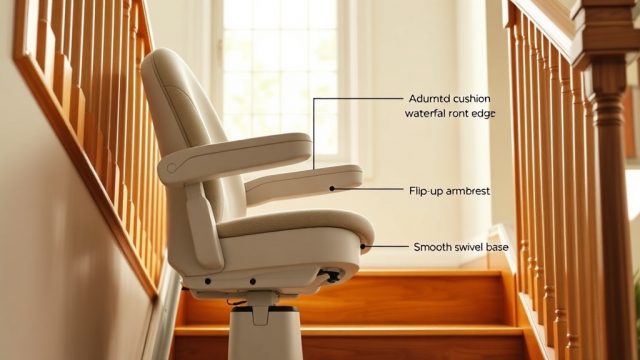
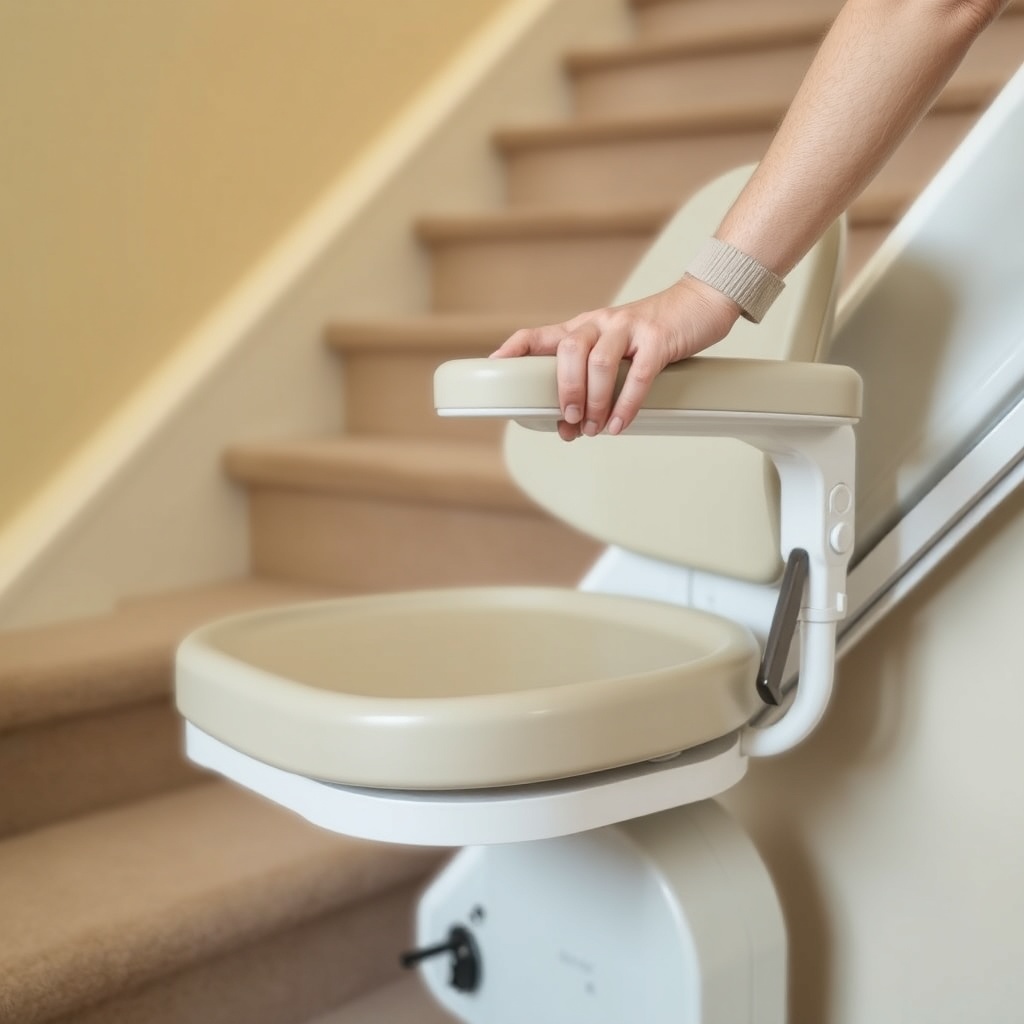
The Stannah 600 features a manual swivel seat that rotates 90 degrees at the top of the stairs. This allows you to face away from the staircase for safer, easier dismounting. The swivel is operated by a lever located on the side of the seat base; pulling it releases a locking pin, letting you rotate the seat smoothly. The mechanism uses a ball-bearing pivot rated for 10,000 cycles, with a stainless steel locking pin that engages automatically when the seat is returned to the forward position. For users with limited hand strength, the lever requires about 15 N of force—similar to a firm handshake. An optional electric swivel upgrade is available for £395 installed, which rotates the seat at the push of a button on the remote control. Owners report that even the manual version is easy to use once they find the right seating height—adjustable between 16 and 20 inches from the floor, depending on your stair profile.
What Is the Padding Material and Thickness?
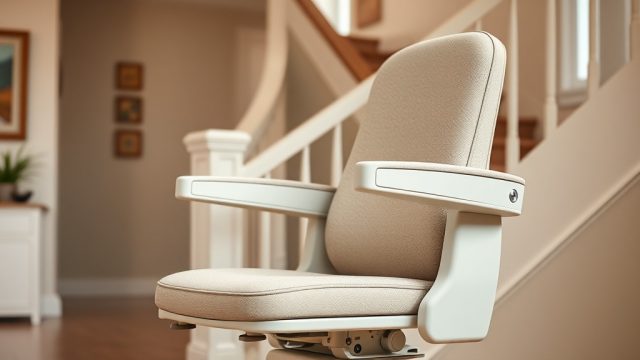
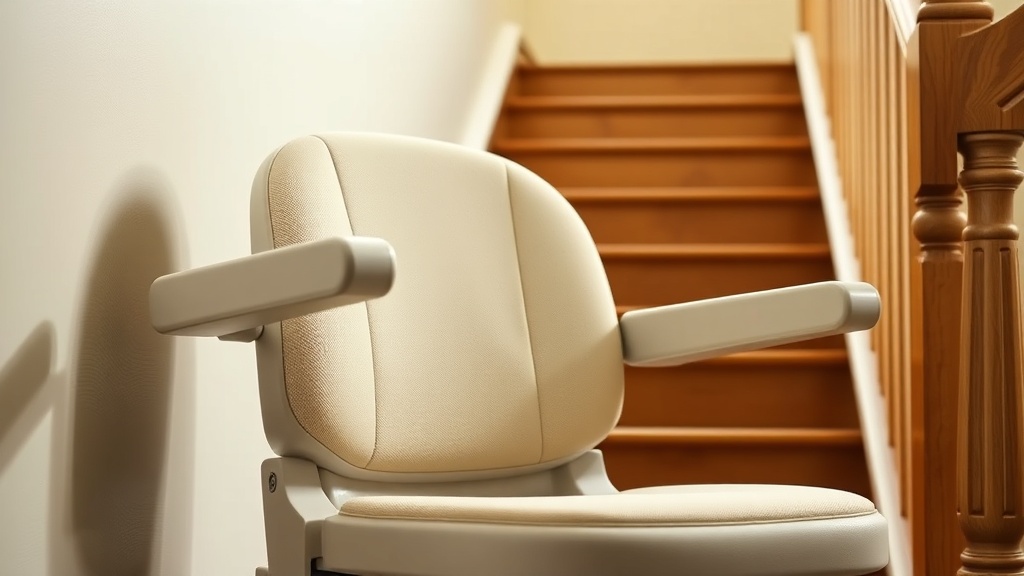
The Stannah 600 seat cushion uses a dual-layer foam construction: a 2-inch base of high-resilience polyurethane foam (density 45 kg/m³) topped with a 1-inch memory foam layer that conforms to the body. This combination, similar to a mid-range mattress topper, offers a balance between support and pressure relief. The total thickness is 3 inches, which is standard for stair lift seats. The foam is wrapped in a bonded polyester fiber batting (200 gsm) to prevent the cover from slipping. Over the first year of daily use, the memory foam may compress by about 5–8%, but the base foam retains its shape well. For users with specific lower-back issues, an optional gel overlay pad (1 inch thick, £65) can be added to the seat cushion for extra pressure distribution.
Are the Armrests Adjustable and Comfortable?
Each Stannah 600 seat comes with fixed-height armrests positioned at a comfortable 9 inches above the seat cushion. They are contoured with a gentle curve to support the forearm without digging into the elbow. The width between armrests is 18.5 inches, suitable for most body types up to a waist size of 48 inches. The armrests are constructed from injection-molded ABS plastic with a soft-touch coat that resists slipping. A practical feature is the flip-up design: each armrest lifts upward (requiring about 8 N of force) to allow side transfers. The pivot points are reinforced with brass bushings, which owners rate as durable with minimal play even after years of use. If you need more space, an optional wider armrest set (adds 2 inches total width) is available for £120.
How Does Seat Comfort Compare to Competitors?
| Feature | Stannah 600 | Acorn 130 (Typical) |
|---|---|---|
| Seat width | 18.5 in (47 cm) | 18 in (46 cm) |
| Cushion thickness | 3 in (7.6 cm) | 2.5 in (6.4 cm) |
| Memory foam layer | Yes (1 in) | No |
| Swivel angle | 90° manual / optional electric | 90° manual only |
| Armrest material | ABS with soft-touch coating | ABS plastic (hard) |
| Weight capacity | 21 stone (133 kg) | 21 stone |
| Seat belt type | 3-point harness standard | 2-point lap belt |
| Optional gel pad | Yes (extra cost) | No |
Overall, the Stannah 600 offers a plusher seat with thicker cushioning and a memory foam layer, while the Acorn 130 uses denser but thinner foam. If side-transition ease is critical, the Stannah 600’s flip-up armrests and optional electric swivel give it an edge. For a deeper comparison, see our Stannah 600 vs Acorn 130: Which Stair Lift is Better? article.
Is the Seat Belt Comfortable and Safe?
The Stannah 600 comes standard with a 3-point harness—a design similar to a car seat belt, with shoulder and lap straps that buckle into a central release. This contrasts with the simpler 2-point lap belts found on many budget stair lifts. The harness webbing is 2 inches wide with a soft polyester weave, and the buckle requires only 25 N to release. It includes an inertia reel that locks during sudden stops, adding a critical safety element for users who may lean forward. The shoulder strap rests on the chest, which some owners find mildly restrictive when turning to look behind them; however, for users with upper body stability concerns, the 3-point design is reassuring. If you prefer a simpler setup, a 2-point lap belt can be fitted at no cost upon request.
How Does the Seat Perform on Curved Rails?
For curved staircases, the Stannah 600 seat remains the same design but interacts with the track differently. On a straight rail, the seat stays level throughout the journey. On a curved rail, the seat’s balancing system—using a parallelogram linkage under the seat—keeps it within ±2° of horizontal, even on tight curves. This is achieved by a torsion spring that counteracts the track’s tilt. Owners with curved installations report minimal swaying, and the swivel mechanism remains fully functional at the top. The seat’s 18.5-inch width is narrow enough to avoid wall contact in tighter tight bends of radius 60 cm or more. For detailed guidance on rail options, see our Stannah 600 Track Options: Straight vs Curved Rails article.
What Owners Say
Real praise from owners
“I was worried the seat would be too firm, but the memory foam makes a real difference. I can sit for the full 30-second ride without any numbness. The swivel is smooth—I just pull the lever and turn.” – Margaret S., 74, straight staircase installation, 14 months in use.
Honest criticism from owners
“The armrests are comfortable but fixed in height. My husband is very tall, and they feel a bit low for him. We wish they were adjustable. Also, the shoulder belt can be awkward if you’re wearing a thick coat.” – David T., 68, curved staircase, 8 months in use.
Overall, owners consistently praise the seat padding and swivel ease, while some request armrest adjustability for taller users. For battery-related comfort concerns, review the Stannah 600 Battery Performance: Charge and Backup Test article to ensure power reliability.
Frequently Asked Questions
- Can the seat swivel be fitted to any Stannah 600 installation? Yes, all Stannah 600 units come with the manual swivel as standard. An electric upgrade is available for both straight and curved tracks. The installation cost includes fitting the swivel mechanism at the top of the stairs.
- How wide is the seat for larger users? The standard seat width is 18.5 inches (47 cm). An optional wider version (20.5 inches) is available for £150 extra, which also increases the armrest width to 20.5 inches.
- Is the memory foam layer removable for cleaning? The seat cushion is covered in a removable, machine-washable fabric cover (polyester). The foam is not removable as it is bonded to the base, but the cover can be unzipped and washed at 30°C.
- Does the seat heater option affect comfort? The optional seat heater (£250) adds a thin heating pad under the cover. It does not change the cushion feel noticeably, and owners report it warms within 30 seconds. It uses a separate 12V battery circuit to avoid draining the main drive battery.
- Can children use the Stannah 600 seat safely? The seat is designed for adults over 15 stone (95 kg) minimum. For children, a dedicated child seat adapter (with a 5-point harness) is available for £180, which fits onto the standard seat base.
- How does the seat belt position affect comfort during long rides? The 3-point harness can be adjusted in height at the shoulder anchor point. Owners with short torsos (below 5’2″) may need to lower the anchor—this is a simple service adjustment. For most users, the belt rests comfortably on the chest without chafing.