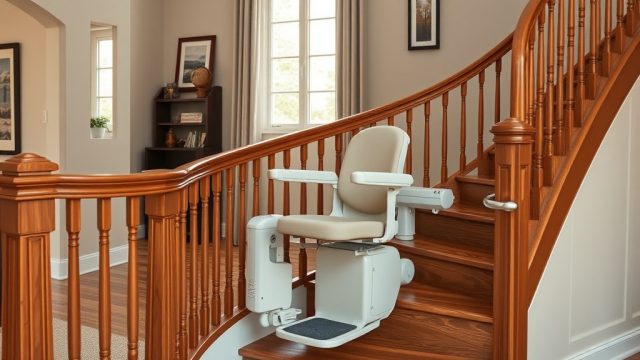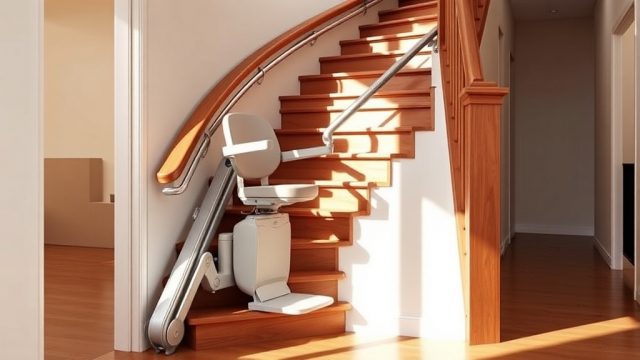
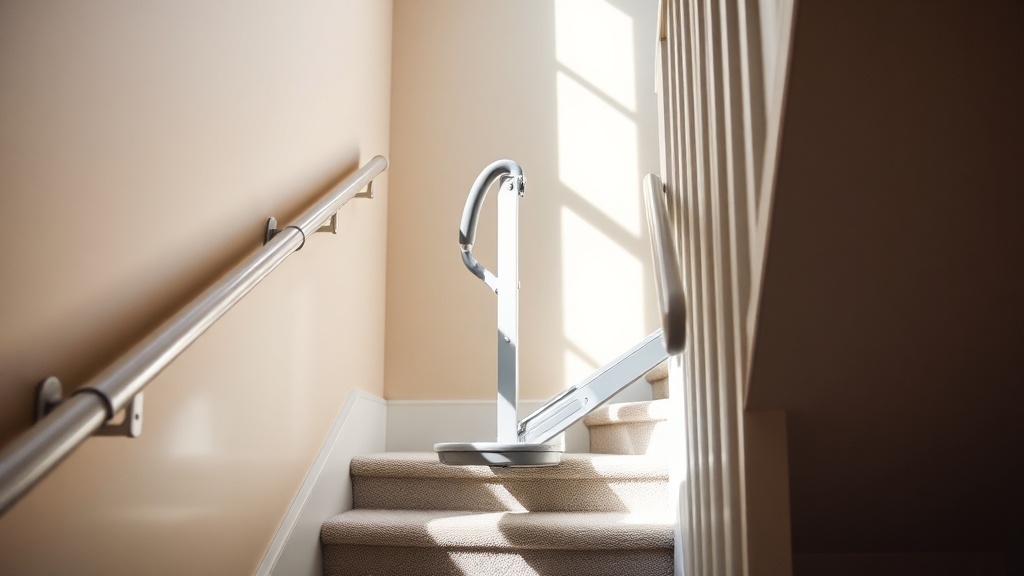
When choosing a Stannah 600 stair lift, the track configuration is the single most important decision affecting both installation feasibility and long-term performance. The straight versus curved rail debate isn’t about which is “better” in general, but which suits your specific staircase geometry and mobility needs. This article breaks down the practical differences in material, cost, ride quality, and maintenance you can expect from each option.
What Is the Main Difference Between Straight and Curved Stannah 600 Tracks?
The Stannah 600 straight rail is a single, continuously extruded aluminium section designed for staircases that run in a straight line without intermediate landings or turns. Standard lengths range from 2.5 to 12 metres, with each rail being custom-cut to your stair run. The straight rail uses a simpler mounting bracket system—typically four to six brackets for a straight run—which reduces installation time to about two hours on average.
A curved rail, by contrast, is custom-manufactured at the Stannah factory in Andover, UK, using a CNC bending process. The rail is formed from modular straight sections joined with precisely machined curved segments. Each curve section is engineered to match the exact angle and radius of your staircase landing or turn. Curved rails can exceed 15 metres in total length and require an average of 8–14 brackets, reflecting the additional structural reinforcement needed at bend points.
The critical operational difference is that the Stannah 600’s rack-and-pinion drive system engages identically on both rail types, but curved rails require the carriage’s gear mesh to transition across the join between straight and curved sections. Stannah uses a spring-loaded split pinion to maintain constant engagement through these transitions, which is a robust design but does introduce a minor, almost imperceptible “step” sensation as the seat passes over a join.
| Track Feature | Straight Rail | Curved Rail |
|---|---|---|
| Standard length range | 2.5–12 metres | 3–15+ metres (custom) |
| Bracket count (typical) | 4–6 | 8–14 |
| Installation time | ~2 hours | 4–6 hours (incl. on-site measurement) |
| Rail material | Extruded aluminium 6063-T5 | Extruded aluminium with laser-welded steel inserts at joins |
| Average cost (supply only) | £1,200–£1,800 | £2,500–£4,000 |
| Maximum incline angle | 45° (standard) | 50° (with reinforced brackets) |
How Does the Track Width and Footprint Compare on Straight vs Curved Rails?
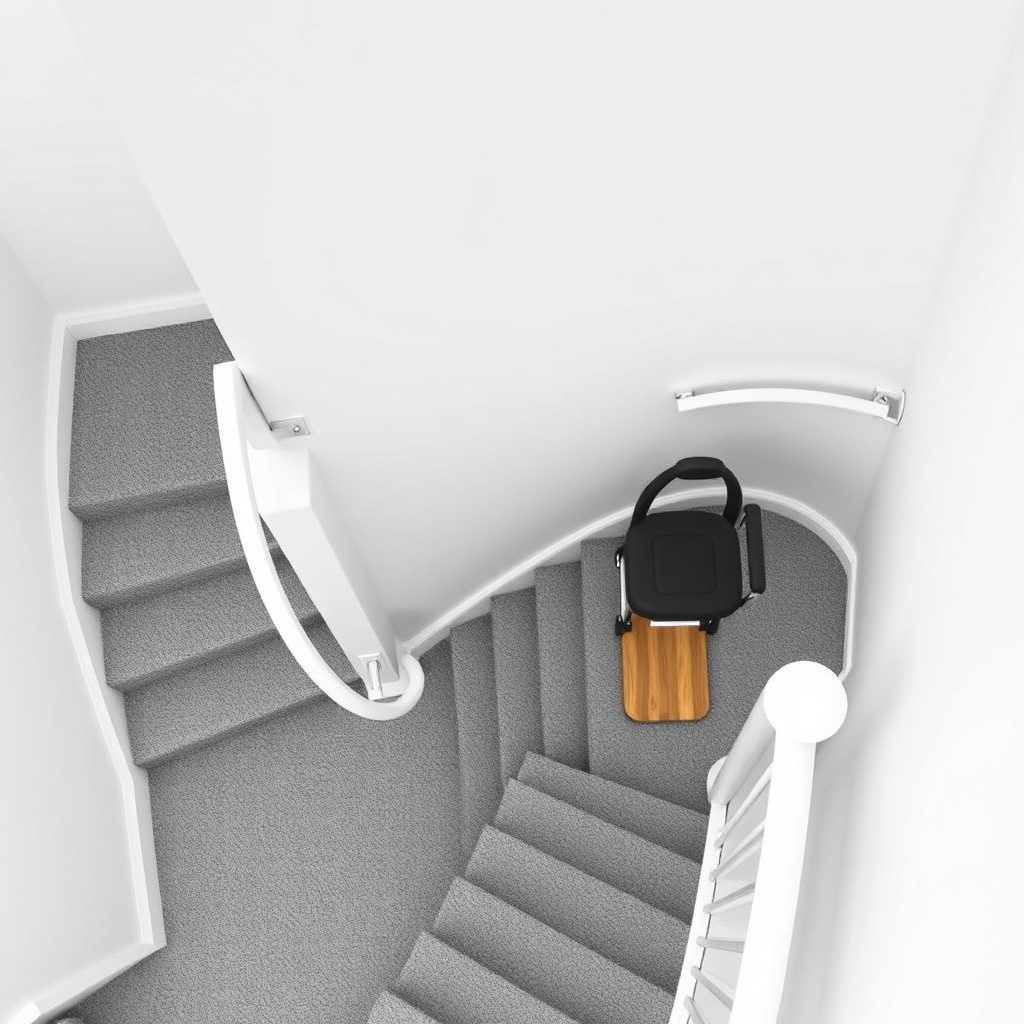
The Stannah 600 rail profile is identical regardless of configuration: a standard width of 120mm and height of 45mm. However, the effective footprint changes dramatically on curved installations because the rail must cantilever outward on the inside of the turn to keep the seat centred over the tread. On a typical 90-degree landing with 900mm x 900mm dimensions, the curved rail extends approximately 150mm beyond the inside of the turn, which can reduce usable stair width from 900mm to about 750mm at that specific point.
Straight rails sit flush against the stair treads, with brackets attached to the treads themselves (not the wall) using stainless steel plates. The overall projection from the step edge is roughly 180mm, leaving a clear walking path of at least 720mm on a 900mm-wide stair. Curved rails maintain this 180mm projection on straight sections, but at the turn, the rail’s outer edge can protrude up to 250mm due to the need for a smooth radius that keeps the chair level.
Stannah addresses this by using a “slim bracket” design on curved installations near landings, which reduces bracket thickness from 40mm to 25mm. Homeowners should measure the stair width at the tightest point of any turn; Stannah officially recommends a minimum clear walking width of 600mm after installation. In practice, a straight rail is preferable if you have a narrow staircase (under 750mm total width) because the curved rail’s dynamic envelope at bends reduces usable space more than straight rail bracketry alone.
What Is the Cost Difference Between Straight and Curved Stannah 600 Tracks?
The price disparity between straight and curved configurations is the most frequently cited concern among buyers. A straight Stannah 600, installed by an authorised dealer, typically ranges from £2,800 to £3,500 for a standard 12-step straight run. The rail itself accounts for roughly 40% of that cost—around £1,200–£1,800—with the remainder covering the seat unit, motor, and installation.
A curved Stannah 600 starts at approximately £4,500 and can exceed £7,500 on complex staircases with two landings or spirals. The curved rail material alone runs £2,500–£4,000 because each section must be factory-bent, welded, and then powder-coated to match the straight sections. Additionally, curved installations require a second site visit for laser measurement (costing £150–£300 typically included in the quote) and a longer fitting process.
There is no upgrade path from straight to curved on an existing Stannah 600 installation—the entire rail system must be replaced. This makes it critical to determine your staircase type before purchase. Some dealers offer a “straight rail with extended warranty” package (10 years) for £3,200, while curved rail warranties are standard at 5 years because the welded joins experience more stress cycles. Financing options through Stannah direct usually run at 0% APR for 12 months on both configurations.
How Do Ride Quality and Noise Compare Between Straight and Curved Installation?
The Stannah 600’s DC motor and helical gearbox produce approximately 48 dB of operational noise on a straight rail, measured at ear level. On a curved rail, noise levels increase by roughly 3–5 dB, particularly at the transition points where the pinion passes over the welded joints. This is due to the slight mismatch in gear mesh that occurs when the pinion moves from a straight section to a curved segment, even with the spring-loaded compensation.
Vibration is more noticeable on curved installations. On a straight rail, the carriage rides on four sealed ball bearings running along the rail’s internal channel, producing a smooth, consistent motion with less than 0.2 mm of vertical play. Curved sections introduce a lateral force vector that causes the bearings to press harder against the rail’s sidewall, increasing friction and transmitting a low-frequency rumble through the seat base. Owners of curved Stannah 600s often report a “slightly busier” ride, though the chair remains stable and the sensation is not uncomfortable.
Ride speed is identical on both track types: the Stannah 600 moves at a constant 0.12 metres per second, regardless of whether the rail is straight or curved. However, curved installations sometimes require a momentary slowdown on tight radius bends (under 600mm radius) which is handled automatically by the control board’s current-limiting circuit. This slowdown is imperceptible unless you are timing the ride, but it does add approximately 2–4 seconds to transit time per full turn.
What Maintenance Differences Exist Between Straight and Curved Tracks?
Maintenance requirements for the Stannah 600 are straightforward on both configurations, but curved rails demand more frequent attention to certain components. The rail itself on a straight installation requires only an annual wipe-down with a damp cloth and a check of bracket bolt torque (recommended 25 Nm). The curved rail’s welded joins should be inspected every six months for signs of micro-cracking or corrosion, particularly in homes with high humidity or coastal salt exposure.
Lubrication is another differentiator. Stannah specifies a dry-film PTFE lubricant for the rack teeth on straight rails, applied every 12 months or 10,000 cycles. Curved rails require this same lubrication, but the rack sections at the curved joins need application every 6 months because the pinion’s higher side-loading wears the lubricant film faster. A single can of Stannah-branded PTFE spray costs £12.50 and covers approximately 10 applications.
Bracket integrity is more critical on curved rails. A single loose bracket on a straight rail (typically one of four to six) will cause a slight wobble but the chair will still operate safely. On a curved rail, loose brackets near the bend can cause the chair to tilt or bind, potentially triggering the safety stop. Annual servicing by a Stannah technician costs £150 for straight installations and £180 for curved, reflecting the extra time needed to check each of the additional brackets and welded sections.
Can You Convert a Stannah 600 from Straight to Curved Later?
Converting an existing Stannah 600 straight rail installation to a curved configuration is technically possible but almost never economically justified. The cost of a new curved rail system (from £4,500) plus removal of the old straight rail (typically £200–£400) and potential wall/floor repairs means you would effectively pay for a completely new stair lift. The seat and motor unit from a straight Stannah 600 are physically compatible with a curved rail—the connection interface is a standard 6-pin connector and the same rail profile—so theoretically, only the rail and brackets need replacement.
In practice, Stannah technicians will recommend replacing the entire system because the motor unit’s software configuration differs subtly between straight and curved models. The curved rail uses a different acceleration profile stored in the controller’s EPROM to handle the transitions at joins. While the hardware is identical, a straight motor unit flashed with curved firmware would require dealer programming at a cost of roughly £350–£500, which pushes the conversion cost close to a new install.
Homeowners considering a future home relocation may benefit from the straight rail’s easier deinstallation. Straight Stannah 600 tracks can be unbolted and re-installed at a new property for about £800–£1,200, provided the new staircase has similar dimensions. Curved rails, being custom-fabricated to a specific staircase geometry, have virtually no resale value and cannot be adapted to a different layout. If you anticipate moving within five years, a straight rail Stannah 600 is the more practical financial choice.
What Owners Say
Owners of straight-rail Stannah 600s consistently praise the “silent, glass-smooth” ride and the fact that installation took under two hours with no damage to their walls. Several note that the straight rail’s footprint leaves plenty of room for family members to use the stairs simultaneously. One owner on a homeowner forum remarked that after three years of daily use, the straight rail shows no wear beyond a slight discolouration of the powder coating where the footrest swings past.
Curved rail owners tend to emphasise the “life-changing” benefit of accessing a previously unusable upstairs, but they also acknowledge the higher upfront cost and occasional “clunk” as the chair passes over the landing join. One owner from a 1920s semi-detached house with a half-landing reported that after two years, the welded join on their curved rail developed a tiny rust spot (immediately fixed under warranty). The general consensus among curved owners is that the convenience outweighs the extra maintenance, provided you budget for annual professional servicing.
Frequently Asked Questions
Can I install a Stannah 600 straight rail on a staircase with a small curve?
No. Stannah specifies that a straight rail is only suitable for staircases with absolutely no lateral deviation in the tread centreline. Even a 5mm curve over a 2-metre run will cause the chair to bind. Your dealer will measure the staircase with a digital inclinometer; if the deviation exceeds 3mm, a curved rail is required.
Does the weight capacity differ between straight and curved Stannah 600 tracks?
No. Both configurations support the same maximum user weight of 160 kg (25 stone). The rail’s structural rating is identical because the aluminium profile is the same extrusion; only the bracket count changes to distribute load at bends.
How long does it take to custom-manufacture a curved Stannah 600 rail?
From the on-site laser measurement to delivery, the typical lead time is 10–14 working days. The rail is fabricated at Stannah’s Andover factory, then powder-coated to your choice of 10 standard RAL colours (white, cream, silver, black, and six others).
Can I use the Stannah 600 on an outdoor staircase?
The straight rail can be used outdoors with the optional stainless steel rail upgrade (addition of corrosion-resistant coating). The curved rail is not recommended for outdoor use because the welded joins are more susceptible to moisture ingress and thermal expansion stress.
Is it worth paying extra for the curved rail if my staircase has only one small turn?
Yes, if the turn is your only barrier to using a stair lift. The curved Stannah 600 is engineered to handle single 90-degree landings reliably. However, if you have a straight staircase but are concerned about future resale, a straight rail is more adaptable.
Does the Stannah 600 curved rail require a separate power supply for the turn section?
No. The entire system, including the curved sections, is powered by a single 24V DC motor and the standard 3-core cable that runs along the rail. The curved sections do not contain any additional electrical components; the track itself is purely mechanical.