StairLiftPro 120 Track Options: Straight vs Curved Rails and Custom Fittings
When selecting a stairlift, the track is the backbone of the system—determining not only the ride quality but also the compatibility with your home’s unique staircase. The StairLiftPro 120 offers two primary rail configurations: straight and curved, each with its own set of advantages and custom fitting potential. This article breaks down the track options, key differences, and how customization ensures a perfect fit for your staircase, all while keeping safety and comfort front and center.
What distinguishes a straight rail from a curved rail on the StairLiftPro 120?
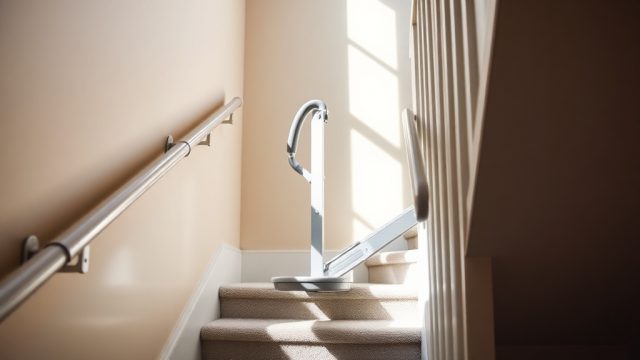
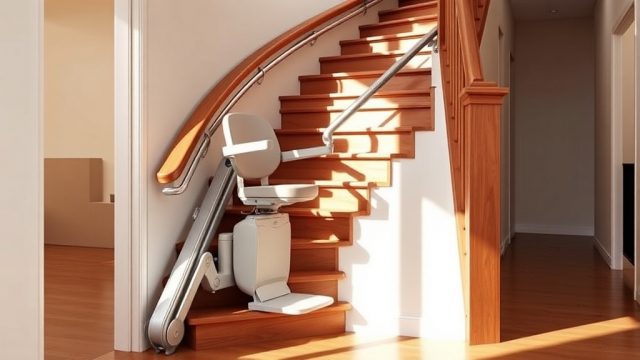
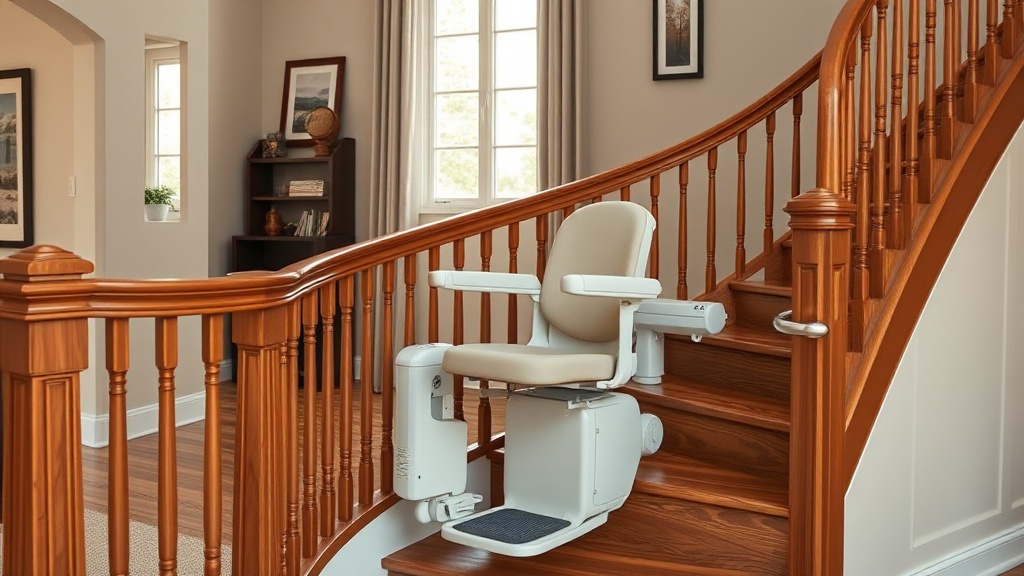
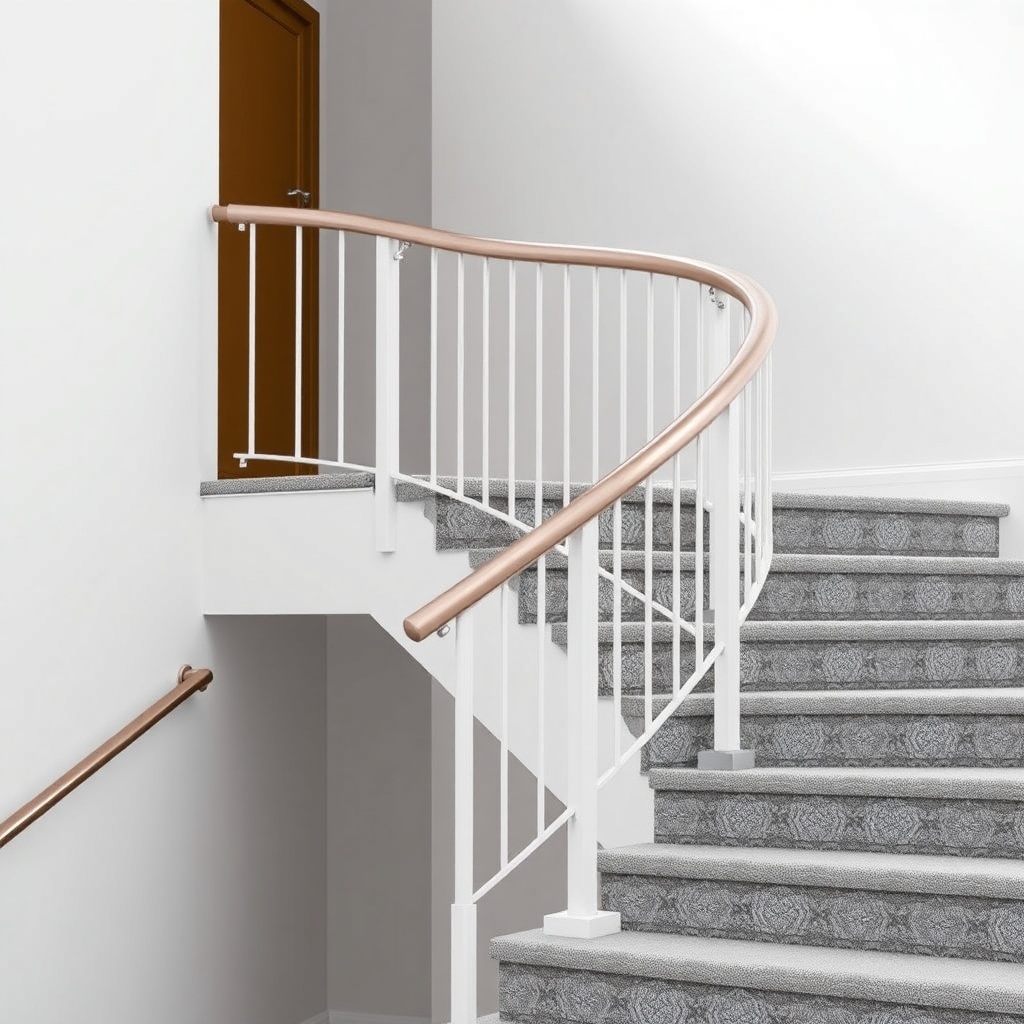
The primary difference lies in the physical layout: straight rails are designed for staircases that run in a single, uninterrupted line without turns, landings, or intermediate landings. Curved rails, on the other hand, are custom-fabricated to follow the exact contour of staircases with bends, multiple flights, or intermediate landings. The StairLiftPro 120’s curved rail system uses a flexible aluminum extrusion that is bent precisely to your stairway’s geometry during manufacturing.
From a mechanical standpoint, straight rails offer a simpler installation process and lower cost, while curved rails require professional measurement and on-site bending (or factory pre-bending) to ensure smooth transition through turns. Curved rails also incorporate additional bearings and a two-rail design for stability around corners.
- Straight rail: Best for standard, straight staircases up to 12 steps; installation time typically 2–3 hours.
- Curved rail: Required for L-shaped, U-shaped, or split-level staircases; installation can take 4–6 hours due to custom fit.
- Cost difference: Curved rail models start at approximately £1,200 more than straight rail equivalents, factoring in custom fabrication.
For a deeper dive into installation timelines and complexity, see our StairLiftPro 120 Installation: DIY vs Professional Setup Guide.
How does the custom fitting process work for curved rails?
Custom fitting begins with a certified technician visiting your home to take precise measurements of your staircase. Using a laser measuring tool and digital mapping software, the technician records the horizontal run, vertical rise, angle of each tread, and any obstructions like banisters, doors, or radiators. These measurements are sent to the factory, where a curved rail is fabricated to exact specifications—usually within 7–10 business days.
The process includes:
- On-site survey: Full measurement of staircase geometry, including tread depth, width, and rail clearance.
- Design review: Recommendations for mounting brackets, turning radius (minimum 38 cm curve radius), and wall clearance.
- Factory fabrication: Rail is bent and stress-relieved to prevent pinching or noise during operation.
- Professional installation: Rail segments are joined using precision-aligned couplers, and the chair is mounted and tested.
Custom fittings also allow for integrated safety features like StairLiftPro 120 Safety Features: Obstruction Sensors and Emergency Stop Systems to be calibrated precisely along the rail path.
What are the space and clearance requirements for each track type?
| Parameter | Straight Rail | Curved Rail |
|---|---|---|
| Minimum staircase width | 70 cm (28 inches) | 75 cm (30 inches) |
| Rail width (profile) | 8.5 cm | 9.2 cm (with twin-track) |
| Clearance from wall | 2 cm | 3 cm (due to curve jig) |
| Turning radius (curved) | N/A | 38–50 cm (15–20 inches) |
| Floor space at top/bottom | 35 cm (14 inches) min | 45 cm (18 inches) min |
| Maximum rail length | 12 meters (40 feet) | 10 meters (33 feet) typical |
| Weight capacity (chair included) | 140 kg (309 lbs) | 135 kg (298 lbs) |
Straight rails typically require less clearance at the top and bottom of the stairs, making them ideal for tighter landings. Curved rails, however, often need additional space at corners to prevent the chair from obstructing traffic flow—a detail best reviewed during a StairLiftPro 120 Price and Warranty: Complete Breakdown consultation.
Can the StairLiftPro 120 track be customized for non-standard staircases (e.g., spiral, outdoor, or narrow)?
Yes, the StairLiftPro 120’s track system can be adapted for various non-standard configurations, though there are limitations. For spiral staircases (with a narrow turning radius under 30 cm), a custom curved rail is possible but may require a special seat swivel and narrower platform—often reducing maximum weight capacity to 120 kg (265 lbs). Outdoor installations use a weather-sealed rail with stainless steel components and UV-resistant coating, though curved outdoor rails are less common due to exposure to moisture and temperature swings.
For extremely narrow staircases (less than 70 cm width), a narrower chair variant (called “slimline”) can be fitted on a straight rail, reducing the seat width by 5 cm while maintaining all safety functions. Custom brackets can also be designed for staircases with irregular tread depths or offset landings. Always consult a certified installer to evaluate feasibility—our StairLiftPro 120 Seat Comfort: Ergonomic Design and Customizable Options guide covers how seat adjustments can maximize space in tight fits.
What are the durability and maintenance differences between straight and curved rails?
Both rail types use extruded aluminum with a powder-coated finish to resist corrosion and wear. Straight rails have fewer moving parts—typically two bearings per rail section—and require less maintenance, with expected lifespan of 15–20 years under normal use. Curved rails, due to the two-track design and additional guide wheels, have more friction points and may require periodic adjustment of the curve jig (every 3–5 years) to maintain smooth operation.
- Straight rail maintenance: Annual lubrication of track and cleaning of debris; no rail alignment needed.
- Curved rail maintenance: Biannual bearing inspection; check for rail flex or wear at weld joints every 5 years.
- Material warranty: Both covered by a 10-year corrosion warranty; curved rail additional 5-year weld warranty.
The battery-powered drive mechanism, detailed in StairLiftPro 120 Battery Power Systems: Charge Time and Backup Performance, is identical for both track types, ensuring consistent operation regardless of rail complexity.
What Owners Say
Feedback from StairLiftPro 120 owners highlights that straight rail users appreciate the simplicity and lower initial cost, with many reporting installation completed in under 3 hours. A retired couple in Essex noted that the straight rail model “felt rock-solid” after two years of daily use with minimal noise. Conversely, curved rail owners often mention the peace of mind from a custom fit—especially for tight L-shaped staircases in older homes. One owner in Glasgow stated, “The turning radius was tricky, but the curved rail handles it perfectly; no jerking or hesitation.” A common positive across both types is the smooth, silent operation; a recurring negative for curved rails is the slightly higher maintenance cost (approximately £80–£120 per service visit versus £50 for straight).
Frequently Asked Questions
1. How long does it take to install a straight rail versus a curved rail on the StairLiftPro 120?
Straight rail installations typically take 2–3 hours, while curved rail installations require 4–6 hours due to custom rail assembly and adjustment. Both include a test run of at least 10 full cycles.
2. Can a curved rail be converted to a straight rail later?
No, the rail itself is permanently shaped during fabrication. If you replace the staircase or move to a new home, the entire curved rail must be replaced; straight rails can be reused if the staircase geometry matches.
3. Is a straight rail safe for elderly or disabled users?
Yes, straight rails meet all safety standards including obstruction sensors and emergency stop—covered in our StairLiftPro 120 Safety Features: Obstruction Sensors and Emergency Stop Systems guide. The primary difference is that curved rails offer additional stability on corners.
4. What is the maximum staircase angle for a curved rail?
The StairLiftPro 120 curved rail can handle angles up to 45 degrees, though custom brackets may be needed for steeper gradients (>35 degrees) to ensure the chair remains level.
5. Does the warranty differ between straight and curved rails?
Both come with a 10-year structural warranty on rails and a 5-year warranty on moving parts. Curved rails additionally include a 5-year weld defect warranty, making the total coverage slightly more extensive.
6. Can I paint or customize the rail color?
Yes, the StairLiftPro 120 offers optional color customization (RAL colors) for both straight and curved rails at an added cost of approximately £150–£250, depending on finish. Standard colors are white, silver, and black.