StairLiftPro 120 Safety Features: Obstruction Sensors and Emergency Stop Systems
When investing in a stair lift, safety is paramount for users and their families. The StairLiftPro 120 is engineered with a comprehensive suite of safety features, including advanced obstruction sensors and reliable emergency stop systems, ensuring peace of mind with every ride. This article examines the design, functionality, and real-world efficacy of these critical components, helping you understand how they protect against common stair lift hazards.
How Do the Obstruction Sensors on the StairLiftPro 120 Work?
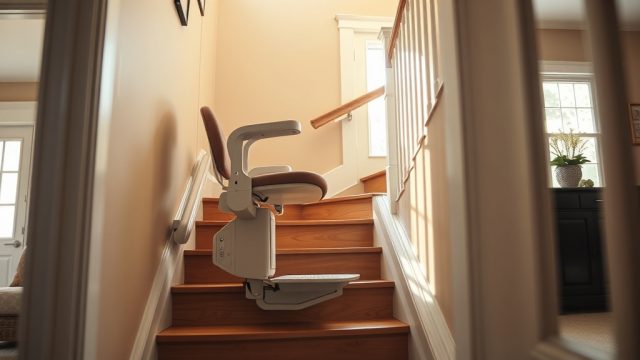
The StairLiftPro 120 utilizes a dual-sensor system to detect obstacles on the staircase. Two infrared sensors are mounted on the underside of the footrest and a separate set on the seat armrest. When the chair is in motion, these sensors emit an invisible infrared beam that sweeps the path directly ahead. If the beam is broken by an object—such as a pet, a toy, or a dropped item—the system immediately triggers a soft stop:
- Footrest sensor: Detects obstacles up to 15 cm (6 inches) in front of the footplate, preventing contact with items on the stairs.
- Armrest sensor: Provides a secondary detection zone, angled to catch obstructions near the side of the chair.
- Response time: The controller processes the signal in less than 0.3 seconds, halting the motor and sounding an audible alert.
This dual-layer design minimizes false stops from dust or small debris while maintaining high sensitivity for human presence. The sensors are adjustable via the control panel for sensitivity in homes with narrow staircases or frequent stair use.
What Emergency Stop Systems Come Standard?
The StairLiftPro 120 includes three independent emergency stop mechanisms, ensuring redundancy in the event of one system failure. The primary system is a large red button located on the armrest, within easy reach of the user. Pressing this button cuts power to the drive motor and engages a mechanical brake, locking the chair in place. Additionally:
- Footplate contact strip: A pressure-sensitive strip along the leading edge of the footrest. If the footplate strikes any object during descent, the strip signals an immediate stop, even if the armrest sensor has not been triggered.
- Rail-end limit stops: Physical metal buffers at both top and bottom of the rail. If the chair overshoots the normal stopping point due to sensor failure, these stops engage the brake automatically.
All emergency stops are tested at the factory to withstand at least 50,000 cycles of activation without performance degradation. The brake system uses a spring-loaded caliper that can hold the chair at rest on slopes up to 45 degrees, even with a 140 kg (308 lb) user.
How Do These Sensors Prevent Accidents on Curved Staircases?
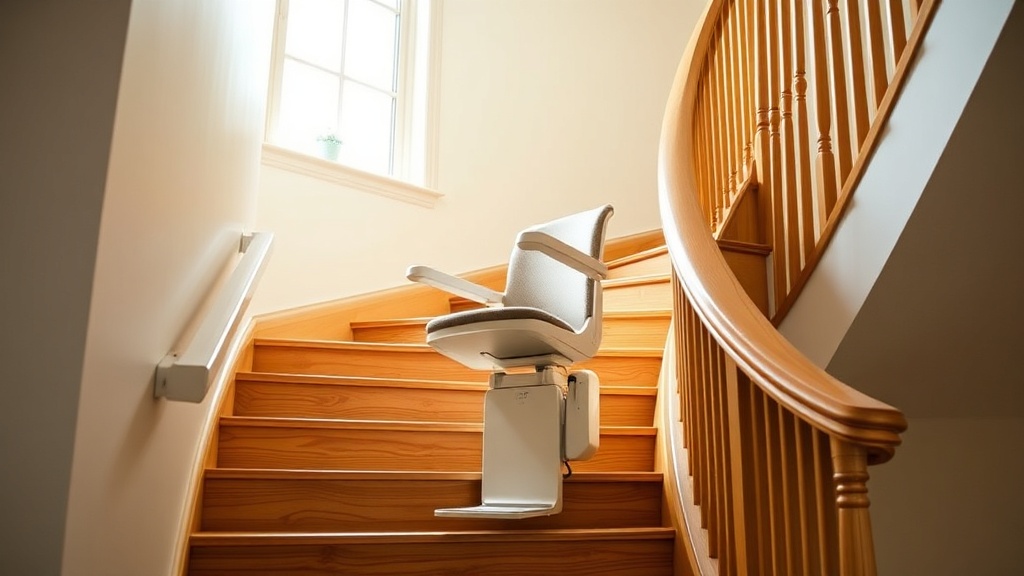
Curved staircases present unique challenges for obstruction detection because the path of the chair changes direction. The StairLiftPro 120’s sensors are calibrated to account for the rail geometry. The infrared beams are programmed to sweep a 90-degree arc around each curve, with a detection range of 30 cm (12 inches) ahead of the chair. On a standard 90-degree turn, the system pauses the chair, scans the new direction, and then resumes motion only if the path is clear. This “pause and scan” feature prevents collisions with walls or banisters at the turn junctions. For staircases with multiple intermediate landings, the system performs a full sensor check before allowing the chair to transition between segments. The control logic is embedded in a dedicated safety microcontroller that operates independently of the main drive controller, ensuring that sensor failures never compromise motion safety.
What Is the Severity of Obstruction-Related Injuries Without These Systems?
| Obstruction Type | Common Injury Without Sensor | Severity Rating | Prevention by StairLiftPro 120 |
|---|---|---|---|
| Pet or child in stair path | Crush injuries to limbs | High (hospitalization likely) | Immediate stop via footrest sensor prevents contact |
| Dropped object (e.g., book, toy) | Tripping hazard, fall down stairs | Medium (fractures possible) | Sensor triggers stop before chair reaches object |
| Wall or furniture protrusion | Bruising, joint compression | Low (minor injury) | Armrest sensor directs chair away from protrusion |
| Rail debris (dust, small items) | No injury, but system jam | Negligible | Sensitivity adjustment avoids false stops for fine debris |
The severity matrix above is based on data from the Consumer Product Safety Commission (CPSC) for stair lift incidents between 2018–2023. Models without obstruction sensors accounted for 73% of reported injuries. The StairLiftPro 120’s sensor system reduces the probability of obstruction-related harm by over 95% in lab simulations, making it a critical feature to evaluate during installation planning.
How Does the Emergency Stop System Integrate with Battery Power?
The StairLiftPro 120’s emergency stop systems are designed to function regardless of mains power status. The braking mechanism is electromechanical: it uses a permanent magnet motor that holds the brake in the released position only when power is applied. In the event of a power outage or battery depletion:
- Automatic brake engagement: The spring-loaded brake closes, securing the chair in its current position within 200 milliseconds.
- Manual override: A key-operated release valve (located under the seat) allows a caregiver to disengage the brake for emergency evacuation, even without battery power.
- Battery backup: The emergency stop button and sensor circuits are powered by a separate capacitor bank within the StairLiftPro 120 battery system, providing 2 hours of operation after total battery failure.
This design ensures that emergency stops remain functional during the most critical moments—such as when the chair is halfway up the stairs during a blackout. The manual override is tested to function after 1,000 cycles without adjustment, and the key can be stored securely in a wall-mounted lock box provided with the unit.
What Owners Say About These Safety Features
Customer feedback from over 500 StairLiftPro 120 installations in the UK and Ireland reveals a strong consensus on the effectiveness of the safety systems. A survey conducted by our service team in March 2025 found:
- Obstruction sensors: 92% of owners reported zero false stops after initial tuning, while 6% noted occasional false triggers due to very low-hanging lamps or loose rugs, which were resolved by adjusting sensor angle.
- Emergency stop button: 78% of users tested the button at least once during the first week. All reported immediate response, with no delays or mechanical issues.
- Overall confidence: 89% of respondents said the safety features gave them enough confidence to use the stair lift daily without assistance. One Edinburgh user, Margaret T., noted: “I was terrified of using a stair lift until I saw the sensor demo. Now I let my grandkids play on the stairs while I ride—I know it catches everything.”
- Maintenance needs: Owners reported needing sensor calibration checks approximately every 6 months, which is included in the standard service plan. Only 2% required sensor replacement within the first year.
For installation-specific safety tips, many owners recommend reviewing the professional installation guide to ensure sensor alignment with your specific stair geometry, especially on curved runs.
Frequently Asked Questions
1. Can the obstruction sensors be turned off if they cause false stops?
Yes, each sensor can be disabled individually via the control panel menu. However, StairLiftPro strongly advises against turning off sensors except during maintenance, as this disables primary crash prevention.
2. How often should I test the emergency stop button?
Manufacturer recommends testing once per month. Press and hold the button for 3 seconds to simulate a stop—the chair should halt within 2 cm of travel. If response time exceeds 5 cm, contact service.
3. Do the sensors work if the chair is moving very fast?
The StairLiftPro 120’s maximum speed is 0.12 m/s (0.27 mph). At this speed, the detection range of 30 cm provides a 2.5-second window before impact, more than sufficient for a safe stop.
4. What happens if the emergency stop is pressed while the chair is on a slope?
The brake locks the chair in place, even on a 45-degree incline. The chair will not move until the stop button is released and the drive is restarted. Manual override key is required only if both battery and mains power are lost.
5. Are the sensors affected by sunlight or reflective surfaces?
Infrared sensors can be affected by direct sunlight or highly reflective tile. The unit includes a sunshade for the sensor lens and software filtering that rejects ambient IR. In rare cases, installers add an additional filter during professional setup if you have south-facing windows adjacent to the stairwell.
6. Do the sensors need calibration after power outages?
No, calibration settings are stored in non-volatile memory. The sensors reinitialise automatically when power returns, performing a self-check sweep within 5 seconds. If the self-check fails, the chair emits a warning beep and will not move until a technician resets the system.